
Thursday, April 23, 2026 | Today's Newsletter | Login
B.C. courts fuel ongoing land ownership uncertainty
Commentary
By Tegan Hill and Geoffrey Moyse
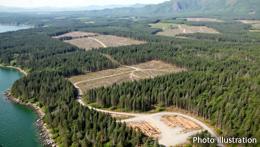
The British Columbia Court of Appeal recently awarded Aboriginal title to the Nuchatlaht nation over 210 square kilometres on Nootka Island off the west coast of Vancouver Island including Crown land used for logging and forestry. This is the latest in a series of developments putting land ownership into question in B.C.
Perhaps most prominent is the Cowichan case where the B.C. Supreme Court granted Aboriginal title to more than 800 acres of land in Richmond (a suburb of Vancouver) valued at $2.5 billion. Critically, the court asserted in this case that where Aboriginal title is determined to exist it is “prior and senior right” to other property interests putting private property at risk in B.C.
Indeed, more than 150 property owners face uncertainty over their property rights prompting the government to establish a $150 million plus fund to support loan guarantees and other measures. While Premier David Eby indicated he will appeal the decision, his government has simultaneously added to the uncertainty by signing bilateral agreements similarly granting First Nations priority over large areas of land.
Consider Haida Gwaii, an archipelago on Canada’s west coast where around 5,000 people live (about half of whom are non-Haida), which includes both public Crown land and private land. In 2024, the Eby government granted Haida Aboriginal title over the land via a bilateral agreement. Though the agreement says private property rights must be honoured, this is incompatible with communal Aboriginal title. Haida Gwaii is just one example of bilateral land use deals the B.C. (and federal) government have signed threatening private property rights.
The B.C. legislature in 2019 also passed and enacted DRIPA, which further muddies the water for private property. In short, the legislation required the province to “bring provincial laws into alignment with the UN Declaration”—the UN’s Declaration on Rights and Indigenous Peoples, which sets out the rights of Indigenous peoples to use, own, develop and control lands, territories and resources.
A recent B.C. Court of Appeal decision found the province’s mineral claims system violated DRIPA and that granting mineral claims in the land of two groups (the Gitxaala Nation and the Ehattesaht First Nation) “harms their cultural, spiritual, economic, and governance rights over their traditional territories,” furthering clouding property rights and investment in the province. The Eby government has announced it will seek to temporarily pause certain sections of DRIPA but it's unclear how this will affect the impact of the legislation.
Now, the unanimous decision by three B.C. Court of Appeal judges recognizes Aboriginal title over a new swath of land on Nootka Island. According to legal expert Dwight Newman, “There is a significant conclusion here in terms of a readiness to infer sufficient occupation based on a more limited evidentiary record.”
The uncertainty caused by these developments may be catastrophic for a province already facing economic challenges—struggling to attract investment, losing residents to other provinces amid a high cost of living, stagnant living standards and bleak outlook.
It’s hard to keep up with all the developments on land use and private property rights in B.C. But one thing is clear—the various bilateral agreements, court decisions and legislation on the issue continues to fuel uncertainty for the province.
Tegan Hill is Director, Alberta Policy at the Fraser Institute. Geoffrey Moyse is a lawyer who specializes in Canadian Aboriginal Law.
Leave a comment